




TUSI AU LEOLEO

TUSI FAITAU ASO

TUSI AU TAUMAFAI
FEAU O LE VAIASO!
(Message of the week)
Tusi Faitau: Levitiko 25: 39-46
Matua: Levitiko 25: 42. "Auā o a'u auauna i latou na ou aumaia nai le nu'u o Aikupito; e le faatauina i latou e fai ma pologa."
Manatu Autu: "Nofo Pologa ma le Tulafono."
"Slavery and the Law."
O le Nofo Pologa, o le tagata ua ola i lalo o le ta’ita’iga a le tasi tagata, e lē lagona sona leo, na’o le faalogo, ma usita’i ma fai. O le tulafono, o le ta’ita’i tama lea e ao ona usita’ia e tagata uma ma mulimuli ta’i uma iai tagata, ina ia ola manuia.
O le mataupu lenei o lo’o i totonu o tulafano o le Tausaga o le Iupeli. E le ose tulafono e faatatau ua na o le tamaoaiga, ae o le tulafono e puipui ai le mamalu o le tagata, ma le amiotonu a le Atua. A tatou faalogo i le upu pologa, e masani lava ona agai o tatou mafaufau i le nofo pologa sa faatino e Amerika ma isi atunuu tetele, e le ose mea lelei. Peita’i, o le pologa o lo’o talanoa iai le tusi a Levitiko lona mataupu e 25, e ese lona uiga, O Isaraelu e mafai ona avea se tagata ma auauna ona o le mativa, nofo aitalafu poo le oge, e lē mafai ona avea ma se olaga tumau, ae o se auala e ola ai se tagata se’ia toe maua lona malosi faatamaoaiga. O le mea lea na faatonuina ai e le Atua, ina ia aua nei faaaoga sese ile vaivai o le tagata, e le gata ina finagalo le Atua ia lavea’i le tagata pologa, ae finagalo foi ia saunia se sosaiete, e le toe foi ai le tagata i le pologa. E lua Tausaga o lo’o tā’ua e le tusi faitau, o le Tausaga o le Sapati, ma le Tausaga o le Iupeli. I le tausaga e 50, e toe faafoi ai fanua ma faamagalo ai aitalafu, ma tatala ai i tua pologa ma toe foi i o latou aiga. O le manatu maualuga, o le Atua e pule aoao i fanua, atoa ma tagata ola uma. O lona uiga e leai se tagata e mafai ona avea le isi tagata, e fai ma ana pologa tumau. O le tulafono na te puipuia le mamalu o tagata. I le fuaiupu e 39, afai e mativa lou uso, e matautia le faaupuga o loo faaoga e le tusi tala, e le o faapea mai, afai e iai sau pologa, leai; ae o loo faapea mai, afai e mativa lou uso. E ui ina galue o ia mo oe, ae tumau pea lona faalaniga, o ia o lou uso, o lona uiga e le aveesea e le tulafono lona mamalu, e le ole faasauāina, e le ole pule esea, ae fai o lou lava uso. E tatau ona fai o ia ma tagata faigaluega e pei o loo totogi, o le feau tāua, o le Atua na te le fuaina tagata ise tamaoaiga poo le mativa, e tumau pea lona mamalu e tutusa ai tagata uma. Faimai le matua: Auā o a’u auauna i latou na ou aumaia nai le nuu o Aiakupito; e le faatauina i latou e fai ma pologa. Silafia lelei e le Atua, le tiga o le pologa, e sasa ina, e tinaiga e aveesea lona saolotoga, ae faimai le Atua, aua lava toute faasauā le tasi i le tasi. O le tagata ua lavea’iina e le Atua, e tatau ona avea ma tagata e faasaoloto i isi tagata, ae aua le faapologaina. O le tulafono na faatapulaaina ai le pule a e mauoa, faimai le fuaiupu e 43, “aua e te pule ia te ia ma le faasauā, a ia e mata’u i lou Atua”. O aso anamua, sa toetoe lava a leai se ‘aiā tatau o pologa, a’o tulafono a Mose, na fai ma pa puipui ua iai tapulaa, e le mafai e le pule ona pule sauā, e le mafai ona faatau atu pe taofia se pologa e faavavau, lona uiga e oo lava i e mauoa, o loo iai foi i lalo o le pule a le Atua. O le feau tāua, e le tatau ona faaa’ogaina le pule e faatigaina ai isi tagata, ae ole pule e tatau ona avea ma auaunaga. O le tulafono e toe faafoi ai le tagata i lona saolotoga. I le tulafono o le Iupeli, e tatau ona toe faafoi ai fanua, ma toe faafoi le pologa i lona aiga ma lona fanua, ma totogi ai aitalafu a le tagata mativa. O le tulafono ua toe tatala ai le ola saoloto o le tagata mativa, e faasaoloto ai le tagata pologa i lalo o pule a le tagata mauoa, ae o le tulafono foi, ua faasaoloto mai ai i tatou i le ola auauna. O le mea ua mautinoa, e ui ina mativa, ae tumau pea lona mamalu o ia o le tagata na faia e le Atua.
Le tatou ofisa i lenei taeao, o le feau faamanatu lea o le talalelei mo tatou uma. Fai i tatou ma pologa ina ia faasaolotoina feau o le Ekalesia, ae aua le avea i tatou ma mea e pologa ai le Ekalesia. O le tulafono, e faatumauina ai le mamalu o tagata o le Ekalesia, ina ua mafai ona avea i tatou ma tagata auauna, ae le ole fia pule. Aua le pule ma le sauā i le Ekalesia, ae ia e mata’u i lou Atua, e ala ile ta auaunaga i le Ofisa Tutonu. O Iesu Keriso, na tūgā o Ia e pei o le pologa, ina ia aoaoina o ia i le usiusitai, ma fai le finagalo o lona Atua. Ua ia faasaoloto i tā’ua mai le nofo pologa i le agasala, ma avatu i tatou ile saolotoga e faavavau. Amene.
- Mautofiga Tuuu. (ANA)
....................................................
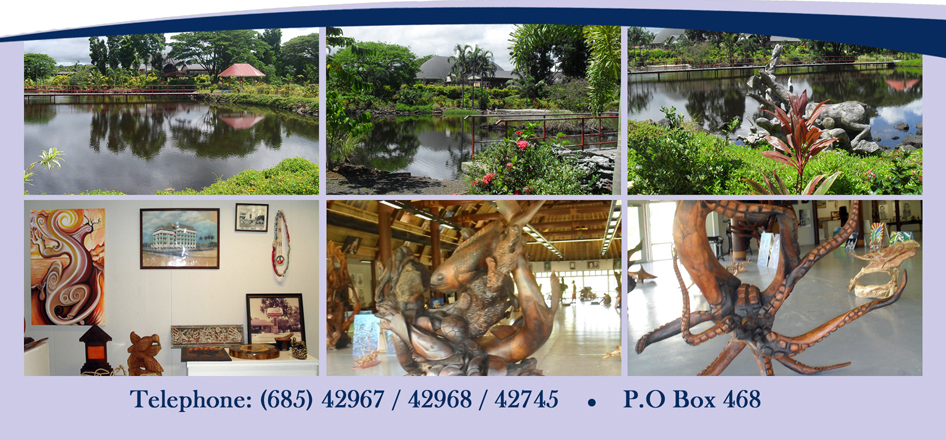
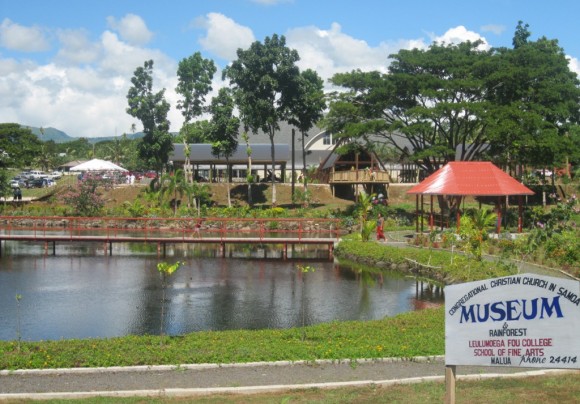
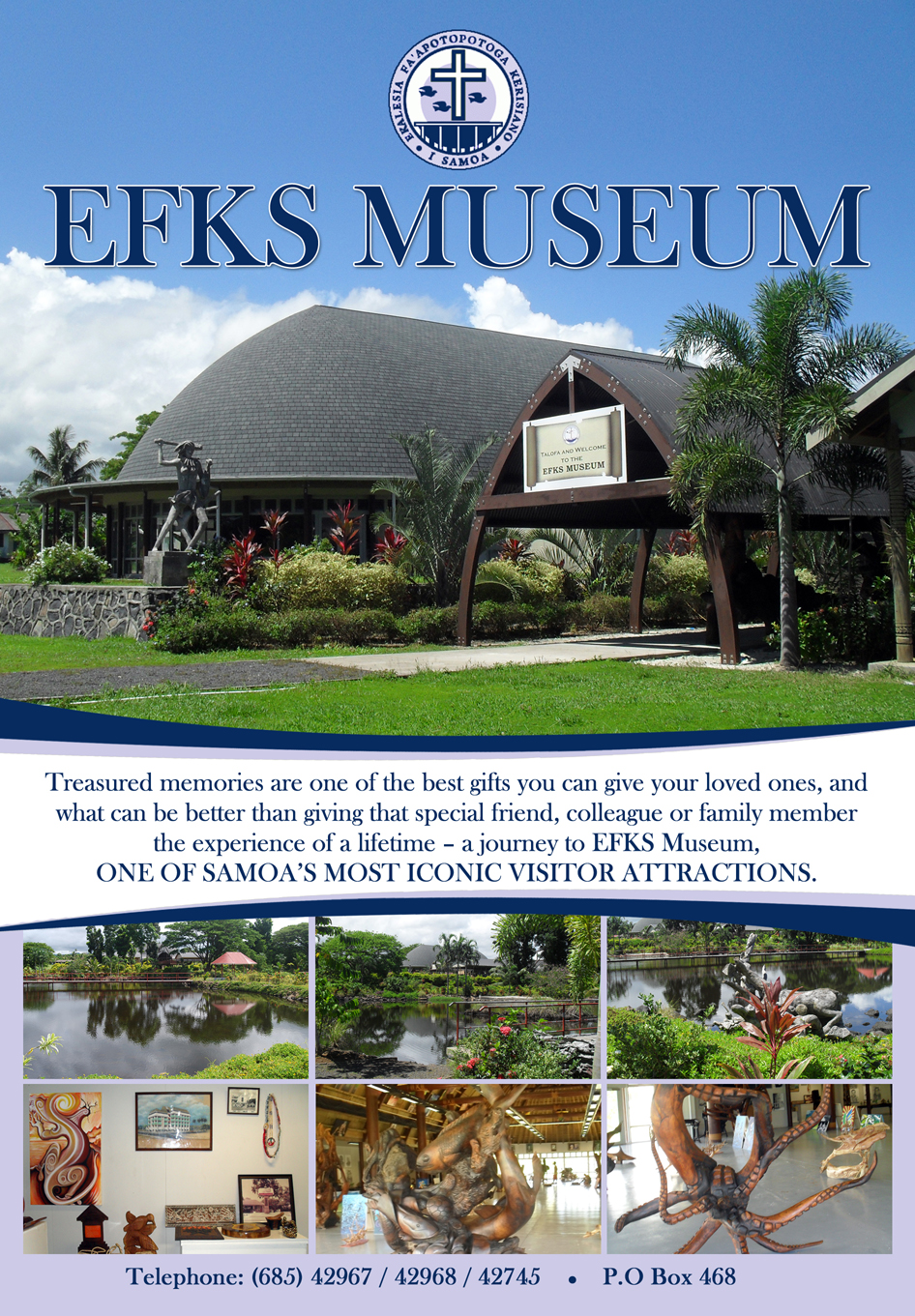
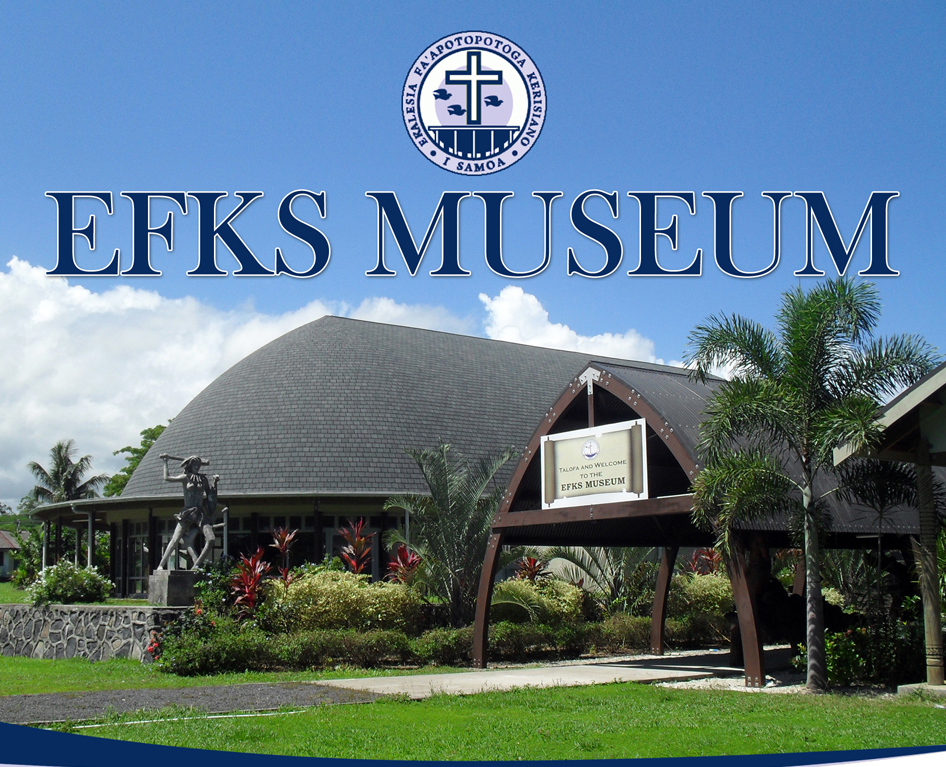
At a height of 4m, EFKS Museum is situated approximately twelve miles west of the capital of Apia and about the same distance east of Faleolo International Airport. It was a new and Samoa’s largest Museum and tourist attractions.
The EFKS Museum has been in the pipeline for some time but at the General Assembly of 2007, it was approved to start work on it with the allocated funds already earmarked for the project.
The ground breaking of the Museum project started in 2009, and the construction completed with the opening on Thursday May 12, 2011. The launching service was led by the then chairman of the Congregational Christian Church of Samoa, Rev Elder Tavita Roma.
With high standards of service, the dedicated team at EFKS Museum is committed to providing visitors with an experience to remember.
Design Concepts
The project master builder was Lale Ieremia Jr (Arrow International Ltd), who descends from a prominent family of the Church.
It is a very attractive piece of architect located within the vicinity of Malua, consisting of a large, high ceiling glass walled Samoan Fale, with office rooms in the front and the back. The front section entry to the main building and to the hull have open-air walkways on both sides decorating with beautiful carvings and statues which tell its own unique story or tale from Samoan ancestors myths. The most northern section of the Museum facing the main road seaside depict the hull of the vessel that brought the first English missionary, Rev John Williams, who brought the LMS church to Samoa and the fulfillment of Nafanua’s prophecy.
Attractive board walkways are built on a man-made turtle and fish bond in front of the Museum, which are enclosed by a high brick wall fence in the front near the main road.
History and Milestones
A certain feature at the entrance of the Museum is the statue of the Samoan goddess Nafanua, who prophesied to Malietoa Vainuupo the arrival of Christianity to Samoa. This was widely accepted as coming to pass when John Williams arrived with the Gospel of Jesus Christ at Sapapalii Savaii in the year 1830.
During the opening of the Museum, the then Acting Prime Minister Tuiloma Pule Lameko described the project as “the Church’s biggest contribution to the tourism and economic development” in history.
“Perhaps the mythical fale (house) at Amoa looked something like this. It is truly a magnificent building. Not only will it be a money spinner for the country, but it will also serve as an archive for church documents and church history,” Said Tuiloma.
On display at the museum are old printing presses that were used in the early days of the church. “These printing presses were used to translate the bible and put Samoan language in writing. This was how Samoa learned to read and write, thanks to the work of the early missionaries who established the Samoan alphabet.” Tuiloma said the museum would be a regular stop for tourists travelling from Faleolo Airport to Apia.
The invited guests for the opening day donated a total of SAT$110,373.26. Notable gifts presented were 150 chairs from faletua Tifilelei Ieremia along with Uilelea Uilelea who donated a Bible. Other donors included United Church of Christ, Lapana Faletolu and PIC Christchurch, Arrow International Ltd and Ricoh New Zealand.
The man-made pond in front of the museum was made possible through kind donations from CWM Pacific who donated SAT$54,834.58, CWM Global’s SAT$216,904.48 along with PCC Kafa Fund (Fiji) and Ricoh Samoa EFKS who donated SAT$7,000.00 and SAT$50,000 respectively.
The administration and day to day running of the Museum was to be handled by the General Purposes Committee (KFE). The Schools Committee (KA) was also to assist especially with the involvement of the School of Fine Arts. The Museum was to house and display the works of the School of Fine Arts who would also use the building for Arts studies and research. Furthermore it would also store significant and historical artifacts of the Church along with her history.
It closed its doors to the public in March 11, 2013 (twenty one months after the official opening in May 2011). It has just re-opened again in July 24 2013 with its new Manager looking after its operation since 26 August 2013.
Facility Rentals and Services / Pricing Guide
Pricing
Conference Room & Cafeteria
- Conference Room - 5 - 150 ppl
- Half – day - $200
- Full – day - $400
- Cafeteria – 5 – 150 ppl
- Half - day - $100
- Full – day - $200
- Wedding – 5 – 150 ppl
- Full - Day - $500
Photo
Any place within museum compound.
- Wedding photo - $150.00
- Reunion photo - $150.00
- Visitors - $20.00
Entrance Fees
- Adults - $10.00
- Children age 12 – 18 - $5.00
ABOUT US | FACILITY RENTALS | PHOTO GALLERY
Treasure memories are one of the best giftsyou can give your loved ones, and what can be better than giving that special friend, collegue or family member the experience of a lifetime - a journey to EFKS Museum.
ONE of Samoa's most iconic visitors attractions.
Telephone: (685) 42967/ 42968/ 42745 ..O Box 468
© 2026 CCCS